Safe Meds Depot

Sale!

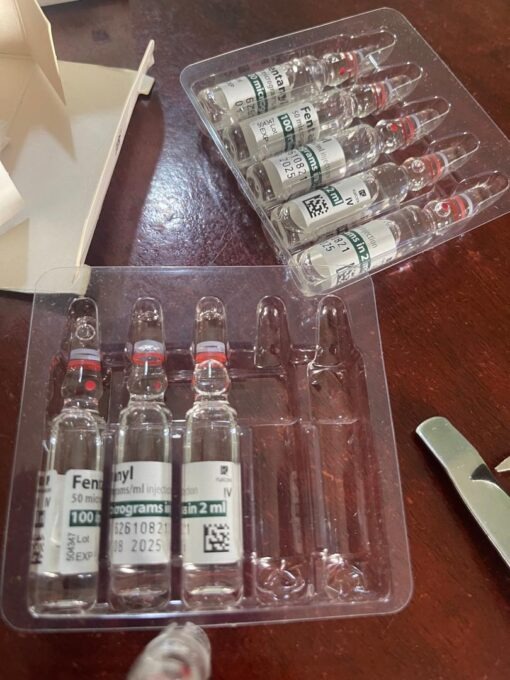
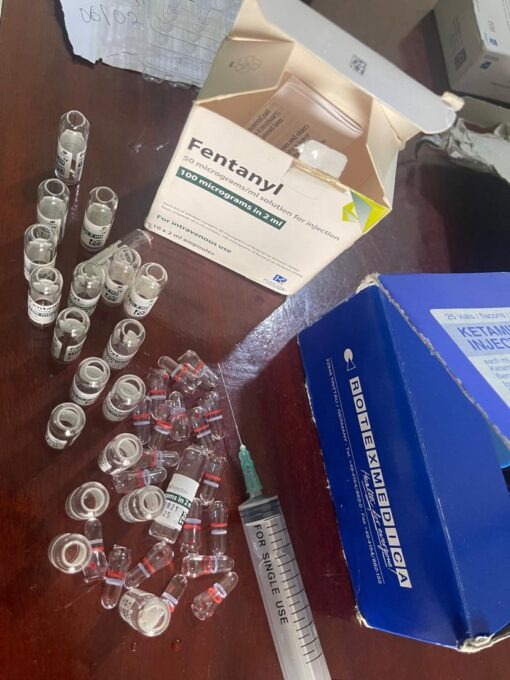
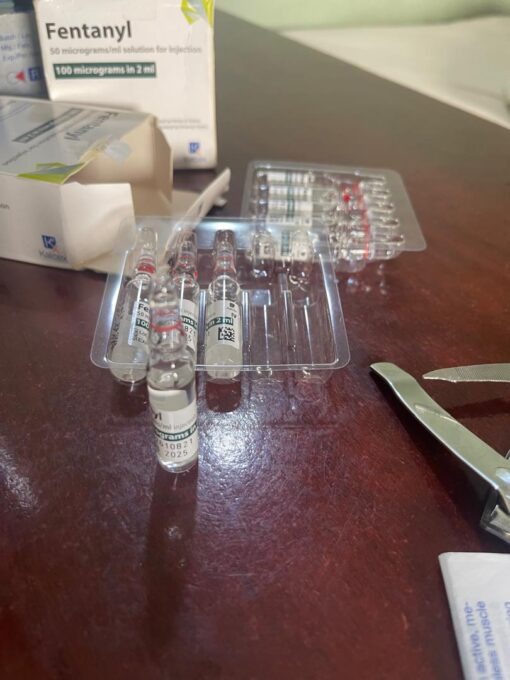
Fentanyl 100 mcg/2ml Injection

Customer Review 0
Rated 5 out of 5

Original price was: $600.00.Current price is: $550.00.

Buy Fentanyl 100 mcg 2ml Injection online.Fentanyl injection is <b>used to relieve severe pain during and after surgery. It is also used with other medicines just before or during an operation to help the anesthetic (numbing medicine) work better. Fentanyl belongs to the group of medicines called opioid analgesics (pain medicines).

Share it :
Payment-Icon.png
International Shipment

Your orders are shipped seamlessly between countries

30 Days Warranty

You have the right to return your orders within 30 days.

Secure Payment

Your payments are secure with our private security network.

Description

Buy Fentanyl 100 mcg/2ml Injection Online

Buy Fentanyl 100 mcg/2ml Injection is indicate for the management of breakthrough pain in patients with cancer who are already receiving and who are tolerant to opioid therapy for their underlying persistent cancer pain. Patients considered opioid tolerant are those who are taking at least 60 mg of oral morphine/day, Fentanyl is indicated for the management of breakthrough pain in patients with cancer who are already receiving and who are tolerant to opioid therapy for their underlying persistent cancer pain. Patients considere opioid tolerant are those who are taking at least 60 mg of oral morphine/day, at least 25 mcg of transdermal Fentanyl/hour, at least 30 mg of oxycodone daily, at least 8 mg of oral hydromorphone daily or an equianalgesic dose of another opioid for a week or longer.

Uses Fentanyl 100 mcg/2ml Injection

Fentanyl citrate is primarily use for its analgesic effects and is indicate for the management of severe chronic or acute pain. Fentanyl is commonly use as part of a pain management plan for cancer patients and other individuals who experience chronic or acute pain.

Brand Name Fentyl
Type Injection
Weight 100 mcg/2 ml
Generic Fentanyl Citrate
Manufacturer Popular Pharmaceuticals Ltd.
Available in English

Theropeutic Class

Pharmacology

Fentanyl is an opioid analgesic. Fentanyl interacts predominately with the opioid mu-receptor but also binds to kappa and delta-type opioid receptors. These mu-binding sites are discretely distribute in the human brain, spinal cord, and other tissues. In clinical settings, Fentanyl exerts its principal pharmacologic effects on the central nervous system. Its primary actions of therapeutic value are analgesia and sedation. Fentanyl may increase the patient’s tolerance for pain and decrease the perception of suffering, although the presence of the pain itself may still be recognize. In addition to analgesia, alterations in mood, euphoria and dysphoria, and drowsiness commonly occur. Fentanyl depresses the respiratory centers, depresses the cough reflex, and constricts the pupils.

Dosage Fentanyl 100 mcg/2ml Injection

  • Starting Dose: The initial dose of Fentanyl should be 100 mcg.
  • Re-dosing patients within a single episode:  Dosing may be repeate once during a single episode of breakthrough pain if pain is not adequately relieve by one Fentanyl dose. Re-dosing may occur 30 minutes after the start of administration of Fentanyl and the same dosage strength should be use.
  • Increasing the dose:  Titration should be initiate using multiples of the 100 mcg Fentanyl tablet. Patients require to titrate above 100 mcg can be instructe to use two 100 mcg tablets (one on each side of the mouth in the buccal cavity). If this dose is not successful in controlling the breakthrough pain episode, the patient may be instructe to place two 100 mcg tablets on each side of the mouth in the buccal cavity (total of four 100 mcg tablets). Titrate above 400 mcg by 200 mcg increments bearing in mind using more than 4 tablets simultaneously has not been studie and it is important to minimize the number of strengths available to patients at any time to prevent confusion and possible overdose. To reduce the risk of overdose during titration, patients should have only one strength of Fentanyl tablet.available at any one time.
  • Dosage Adjustment: Generally, the dose of Fentanyl should be increase when patients require more than one dose per breakthrough pain episode for several consecutive episodes.

Injection

  • Fentanyl injection can be administere intravenously either as a bolus or by infusion & by intramuscular route also. The dose of fentanyl should be individualize according to age, body weight, physical status, underlying pathological condition, use of other drugs and type of surgery and anesthesia.
  • Doses in excess of 200mcg are for use in anesthesia only. As a premedicant, 1-2 ml fentanyl may be given intramuscularly 45 minutes before induction of anesthesia. After IV administration in unpremedicate adult patients, 2ml fentanyl may be expecte to provide sufficient analgesia for 10-20 minutes in surgical procedures involving low pain intensity. 10 ml fentanyl injecte as a bolus gives analgesia lasting about one hour. The analgesia produce is sufficient for surgery involving moderately painful procedures. Giving a dose of 50mcglkg fentanyl will provide intense analgesia for some four to six hours, for intensely stimulating surgery.
  • Fentanyl may also be given as an infusion. In ventilate patients, a loading dose of fentanyl may be given as a fast infusion of approximately 1 mcg/kg/min for the first 10 minutes followe by an infusion of approximately 0.1 mcg/kg/min. Alternatively the loading dose of fentanyl may be given as a bolus. Infusion rates should be titrate to individual patient response; lower infusion rates may be adequate. Unless it is planne to ventilate post operatively, the infusion should be terminate at about 40 minutes before the end of surgery.
  • Lower infusion rates, e.g. 0.05-0.08 mcg/kg/min. are necessary if spontaneous ventilation .is to be maintaine. Higher infusion rates (up to 3 mcg/kg/min) have been use in cardiac surgery. Fentanyl is chemically incompatible with the induction agents thiopentone & methohexitone because of wide differences in pH
  • Use in elderly and debilitate patients: It is wise to reduce the dosage in the elderly and debilitate patients. The effect of the initial dose should be taken into account in determining supplemental doses.

Transdermal
Intractable chronic pain:

  • Adult: Patches deliver fentanyl in doses that range from: 12-100 mcg/hr. Doses should be individually titrate base on previous use of opioids.
  • Opioid-naive patients: Initially, ≤25 mcg/hr; it is recommende to initially titrate w/ low doses of short-acting opioids before starting fentanyl patches.
  • Patients receiving a strong opioid analgesic: Initial dose should be based on the previous 24-hr opioid requirements. During transfer to fentanyl patches, previous opioid treatment should be phased out gradually. If patient requires doses >100 mcg/hr, >1 patch may be use; consider alternative or additional therapy if doses >300 mcg/hr are require. Replace patch every 72 hr and apply the new patch to a different site; avoid using the same area of skin for a few days.
  • Elderly: Dose reduction may be neede.

How Long Does It Take to Work?

The effects of fentanyl citrate usually occur within minutes of administration and can last for up to several hours. The duration of effect depends on the dose and the individual’s metabolism.

Overdose Effects of Fentyl 100 mcg/2 ml

In insufficient overdosage, Fentanyl would produce narcosis, marke skeletal muscle rigidity. Cardio-respiratory depression and cyanosis may also occur. In the presence of hypoventilation or apnoea, oxygen should be administere and respiration should be assiste. A specific narcotic antagonist, such as naloxane, should be available for use as indicate to manage respiratory depression.

Administration

Tablet Administration: Patients should remove the tablet from the blister strip and immediately place the entire tablet in the buccal cavity (above a rear molar, between the upper cheek and gum). Patients should not attempt to split the tablet. The tablet should not be chewe or swallowe, as this will result in lower plasma concentrations than when taken as directe. The tablet should be left between the cheek and gum until it has disintegrate, which usually takes approximately 14-25 minutes. After 30 minutes, if remnants from the tablet remain, they may be swallowe with a glass of water.

Interaction

Co-administration of different antifungals, macrolide antibiotics, CNS depressant drugs like ketoconazole, itraconazole, troleandomycin, clarithromycin, nelfinavir, and nefazadone may enhance or prolong the effects of Fentanyl. The concomitant use of amprenavir, aprepitant, diltiazem, erythromycin, fluconazole, fosamprenavir, grapefruit juice, and verapamil with Fentanyl may also result in an increase in Fentanyl plasma concentrations, which could increase or prolong adverse drug effects and may cause potentially fatal respiratory depression.

Contraindications

Fentanyl is contraindicate in the management of acute or postoperative pain. This product must not be use in opioid non-tolerant patients. Fentanyl is contraindicate in patients with known intolerance or hypersensitivity to any of its components or the drug Fentanyl.

Side Effects

  • Respiratory depression (most serious and common)
  • As with other narcotic analgesics, the most common serious adverse reactions reporte to occur with Fentanyl are respiratory depression, apnoea, and bradycardia.
  • Apnoea (temporary stopping of breathing)
  • Muscular rigidity
  • Myoclonic movements (involuntary muscle jerks)
  • Bradycardia (slow heart rate)
  • Higher risk of respiratory depression is more likely to occur with intravenous administration if a dose is given too rapidly
  • Respiratory depression is rare with intramuscular administration

Pregnancy & Lactation

Pregnancy category C. There are no adequate and well-controlle studies in pregnant women. Fentanyl should be use during pregnancy only if the potential benefit justifies the potential risk to the fetus. Fentanyl is excrete in human milk; therefore Fentanyl should not be use in nursing women because of the possibility of sedation and/or respiratory depression in their infants.

Precautions

Opioid analgesics impair the mental and/or physical ability require for the performance of potentially dangerous tasks (e.g. driving a car or operating machinery). Patients taking Fentanyl should be warne of these dangers and should be counsele accordingly. The use of concomitant CNS active drugs requires special patient care and observation.

  • Chronic pulmonary disease: Fentanyl should be titrate with caution in patients with chronic obstructive pulmonary disease or pre-existing medical conditions predisposing them to respiratory depression.
  • Head injuries and increase intracranial pressure: Opioids may obscure the clinical course of a patient with a head injury and should be use only if clinically warrante.
  • Cardiac disease: Intravenous Fentanyl may produce bradycardia. Therefore, Fentanyl should be use with caution in patients with bradyarrhythmias.
  • Hepatic or renal disease: Fentanyl should be use with caution because of the hepatic metabolism and renal excretion of Fentanyl.

Storage Conditions

Store between 20-25°C. Protect from light.

Where Can I Buy Fentanyl 100 mcg/2ml Injection?

Are you looking to buy Fentanyl 100 mcg/2ml Injection from a truste and reliable source? Visit Safe Meds Depot, a dependable platform known for high-quality products and a smooth customer experience. Our website is design to be secure and user-friendly, offering fast order processing and quick delivery. We provide prompt shipping services to the USA and UK, ensuring your order reaches you as quickly as possible. Explore our platform today to learn more, place your order with confidence, and experience quality you can trust.

Additional information

Qty

5 Ampoules (100mcg/2 ml) Each Vial

Reviews

There are no reviews yet.

Be the first to review “Fentanyl 100 mcg/2ml Injection”

Your email address will not be published. Required fields are marked *

Translate »