Description
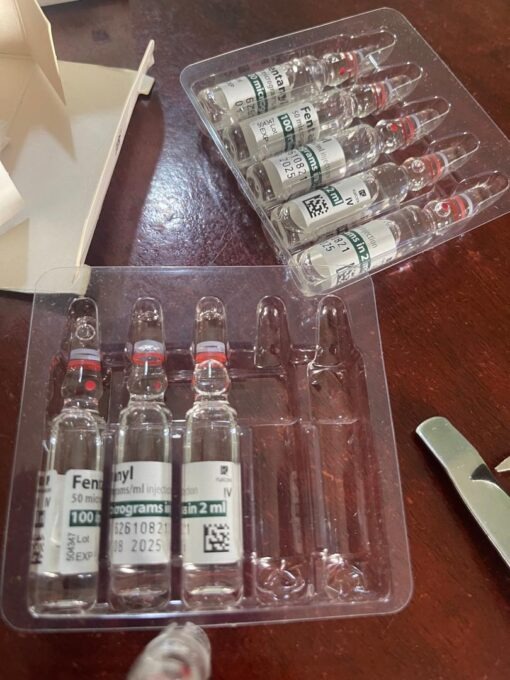
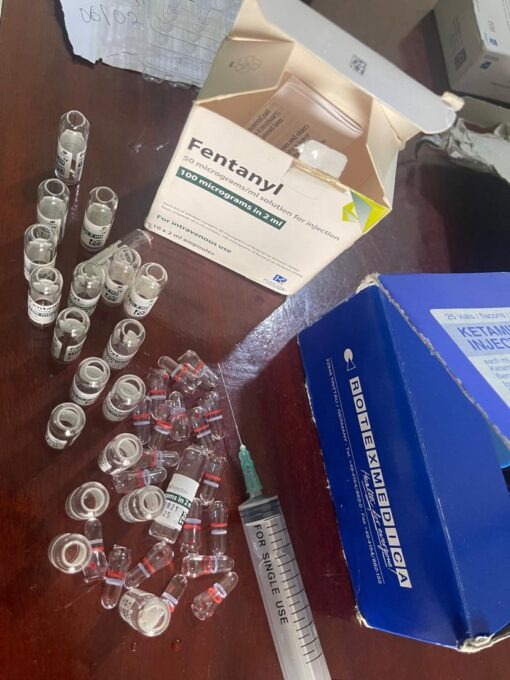
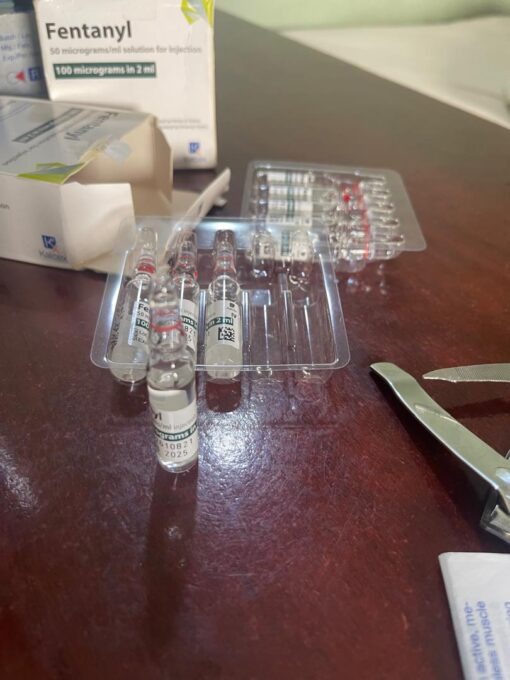
Buy Fentanyl 100 mcg 2ml Injection online.Fentanyl injection is used to relieve severe pain during and after surgery. It is also used with other medicines just before or during an operation to help the anesthetic (numbing medicine) work better. Fentanyl belongs to the group of medicines called opioid analgesics (pain medicines).
Fentanyl may also produce other signs and symptoms characteristic of opioid agonists including euphoria, miosis,
bradycardia and bronchoconstriction.
Severe and unpredictable potentiation by MAO inhibitors has been reported for other opioid agonists. Although this
has not been reported for fentanyl, there are insufficient data to establish that this does not occur with fentanyl.
Therefore, when fentanyl is administered to patients who have received MAO inhibitors within 14 days, appropriate
monitoring and ready availability of vasodilators and beta-blockers for the treatment of hypertension is indicated.
Head Injuries and Increased Intracranial Pressure — Fentanyl should be used with caution in patients who may
be particularly susceptible to respiratory depression, such as comatose patients who may have a head injury or brain
tumor. In addition, fentanyl may obscure the clinical course of patients with head injury.
PRECAUTIONS
General: The initial dose of fentanyl citrate should be appropriately reduced in elderly and debilitated patients. The
effect of the initial dose should be considered in determining incremental doses.
Nitrous oxide has been reported to produce cardiovascular depression when given with higher doses of fentanyl.
Certain forms of conduction anesthesia, such as spinal anesthesia and some peridural anesthetics, can alter
respiration by blocking intercostal nerves. Through other mechanisms (see CLINICAL PHARMACOLOGY)
fentanyl can also alter respiration. Therefore, when fentanyl is used to supplement these forms of anesthesia, the
anesthetist should be familiar with the physiological alterations involved, and be prepared to manage them in the
patients selected for these forms of anesthesia.
When a tranquilizer is used with fentanyl, pulmonary arterial pressure may be decreased. This fact should be
considered by those who conduct diagnostic and surgical procedures where interpretation of pulmonary arterial
pressure measurements might determine final management of the patient. When high dose or anesthetic dosages of
fentanyl are employed, even relatively small dosages of diazepam may cause cardiovascular depression.
When fentanyl is used with a tranquilizer, hypotension can occur. If it occurs, the possibility of hypovolemia should
also be considered and managed with appropriate parenteral fluid therapy. Repositioning the patient to improve
venous return to the heart should be considered when operative conditions permit. Care should be exercised in
moving and repositioning of patients because of the possibility of orthostatic hypotension. If volume expansion with
fluids plus other countermeasures do not correct hypotension, the administration of pressor agents other than
epinephrine should be considered. Epinephrine may paradoxically decrease blood pressure in patients treated with a
neuroleptic that blocks alpha adrenergic activity.
Elevated blood pressure, with and without pre-existing hypertension, has been reported following administration of
fentanyl combined with a neuroleptic. This might be due to unexplained alterations in sympathetic activity following
large doses; however, it is also frequently attributed to anesthetic and surgical stimulation during light anesthesia.
When fentanyl is used with a neuroleptic and the EEG is used for postoperative monitoring, it may be found that the
EEG pattern returns to normal slowly.
Many neuroleptic agents have been associated with QT prolongation, torsades de pointes, and cardiac arrest.
Neuroleptic agents should be administered with extreme caution in the presence of risk factors for development of
prolonged QT syndrome and torsades de pointes, such as: 1) clinically significant bradycardia (less than 50 bpm), 2)
any clinically significant cardiac disease, including baseline prolonged QT interval, 3) treatment with Class I and
Class III antiarrhythmics, 4) treatment with monoamine oxidase inhibitors (MAOI’s), 5) concomitant treatment with
other drug products known to prolong the QT interval and 6) electrolyte imbalance, in particular hypokalemia and
hypomagnesemia, or concomitant treatment with drugs (e.g. diuretics) that may cause electrolyte imbalance.
ECG monitoring is indicated when a neuroleptic agent is used in conjunction with fentanyl as an anesthetic
premedication, for the induction of anesthesia, or as an adjunct in the maintenance of general or regional anesthesia.
Vital signs should be monitored routinely.
Respiratory depression caused by opioids can be reversed by opioid antagonists such as naloxone. Because the
duration of respiratory depression produced by fentanyl may last longer than the duration of the opioid antagonist
action, appropriate surveillance should be maintained. As with all potent opioids, profound analgesia is accompanied
by respiratory depression and diminished sensitivity to CO2 stimulation which may persist into or recur in the
postoperative period. Respiratory depression secondary to chest wall rigidity has been reported in the postoperative



Reviews
There are no reviews yet.